September 24, 2026
AI vs. Designer - Part II
What Happens When AI Designs a €50M Pitch Deck?

Antonio de Jesus


What Happens When AI Designs a €50M Pitch Deck?
We gave the same €50M bid proposal brief to AI and to our world-class designer, Michał. AI finished in under 50 seconds. Michał finished in 7 hours, 19 minutes, three layout rewrites, and one deep-thinking stare out the window. Both decks got the message across, but only one felt like it would actually win the contract.
A bid proposal is one of the most high-stakes documents in business. It’s the formal package a company submits when competing for a major contract, whether it’s called a tender, RFP response, bid submission, or proposal document.
Different industries use different terms, but they all have the same goal: beat the competitors and secure the deal.
A bid proposal is typically:
• A long, compliance-heavy document
• Filled with requirements & data
• Co-created by finance, legal, procurement, commercial, and operations teams
• Designed to prove capability, not to entertain
It’s not creative. It’s not “fun.” It’s a legal, financial, strategic document disguised as a deck. And one mistake can cost millions.
So we wondered: “If we gave AI a €50M bid proposal to create, what would it do?”
Time for Test #2.
Here’s the exact brief we used:
“Create a bid proposal deck for a global company bidding for a €50M partnership contract. Must feel trustworthy, clear, structured, and confident.”
Same brief. Same rules. Same opponents:
Team AI: ChatGPT, never tired, never overthinks, never asks “should we?”
Team Humans:
Michał, master of layout, meaning, and someone who treats whitespace like real estate markets.
Fun fact: Michał is a lecturer at the Design Academy and teaches students how to use AI strategically. Not to replace creativity, but to help designers adapt to this new AI age.
This episode is the perfect example of that co-creation.
We gave both: 8 hours, same fictional company, same bid requirements PDF.
AI replied instantly: “Draft completed.”
Michał replied: “Okay first, which slide actually decides the outcome? Because that’s where we start.”
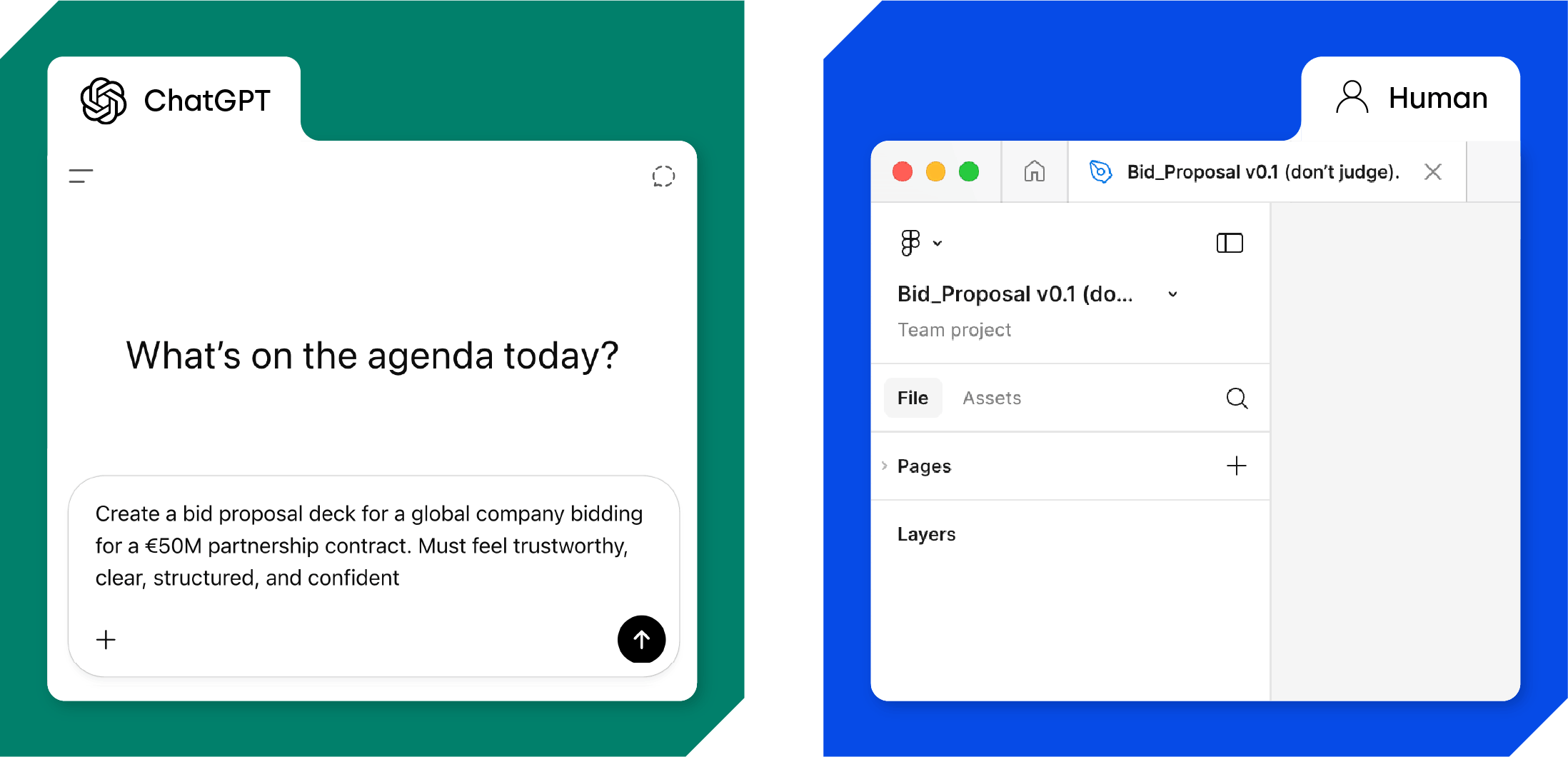
AI went straight into production mode:
• Generated slide titles
• Added a timeline
• Inserted bullet points
• Created value claims
• Chose blue (obviously… it always chooses blue)
Time taken: less than 2 minutes.
Meanwhile on the human side:
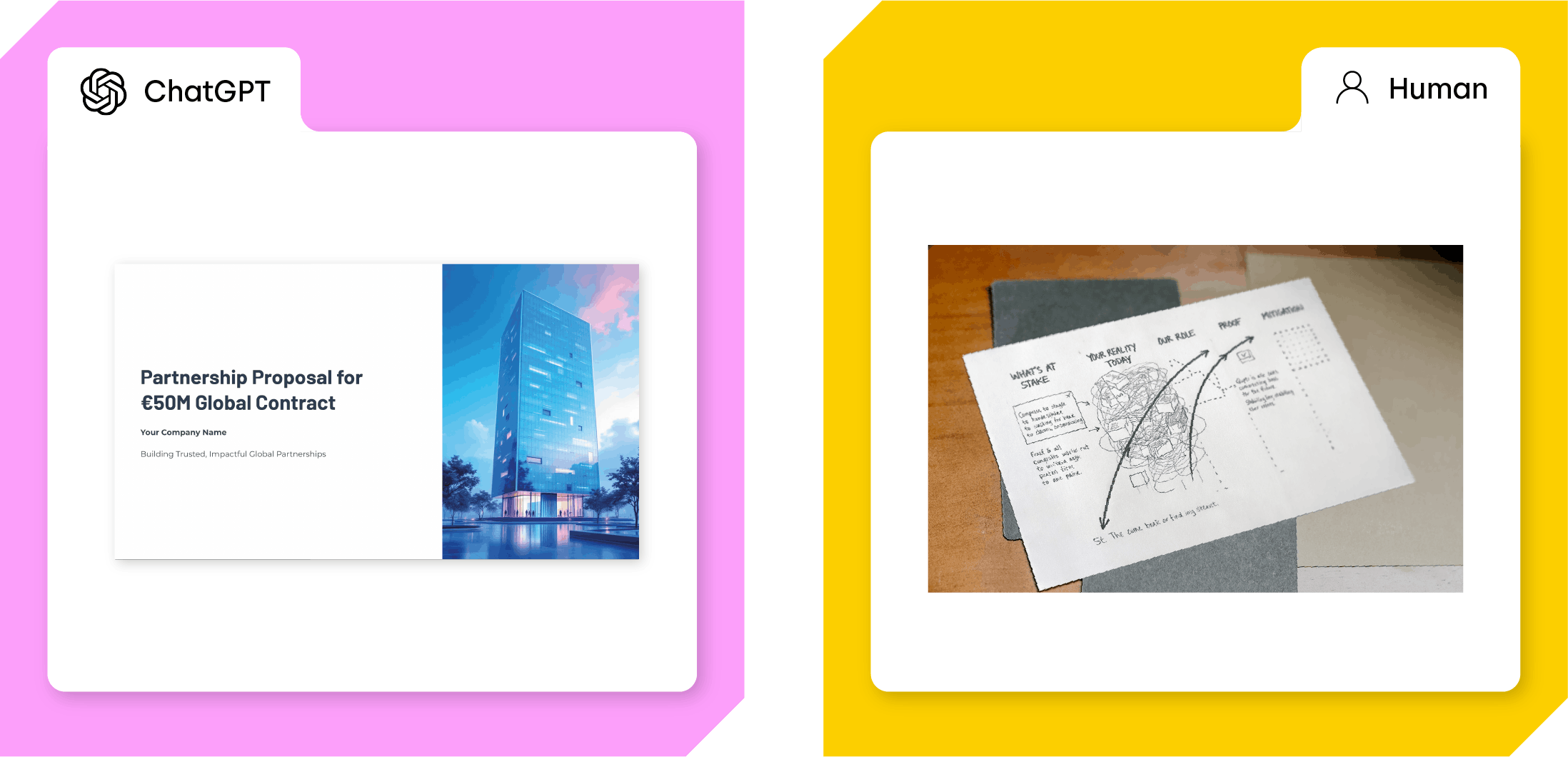
Michał started with:
• A whiteboard
• A story arc sketch
• Post-its
• Espresso!
He mapped out a structure around the psychology of persuasive proposals, not just the content.
Legendary quote from his corner: “Bid decks are like dating, people say it’s about facts, but it’s actually about commitment and risk, and nobody wants to look desperate.”
After 30 minutes:
* AI: finished & back in rest mode.
* Michał: still testing typography rhythm
(Yes, that’s a real thing. Apparently.)
After 2 hours:
- AI: resting.
- Michał: in the zone.
Let’s break it down.
ChatGPT’s Bid Proposal Deck (Team AI)
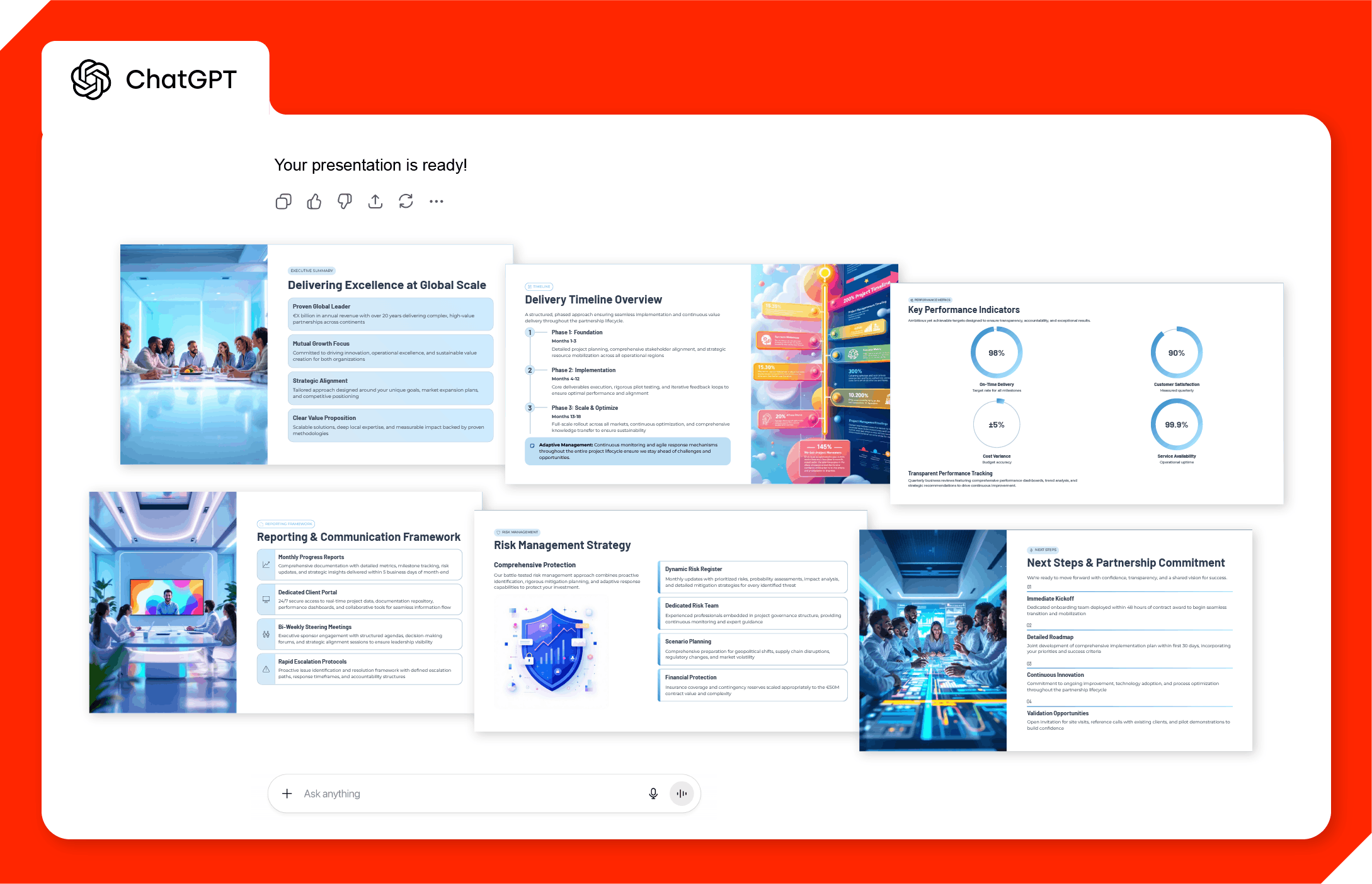
Looked clean, clear, and formal. Included:
1. Executive Summary
2. Our Capabilities
3. Delivery Timeline
4. KPIs & Reporting
5. Risk Management
No mistakes, no drama, no confusion. But also: no emotional pulse. One slide literally said: “We are committed to excellence.” Which, statistically speaking, every bid deck in history has said.
Michał’s Bid Proposal Deck (Team Humans)
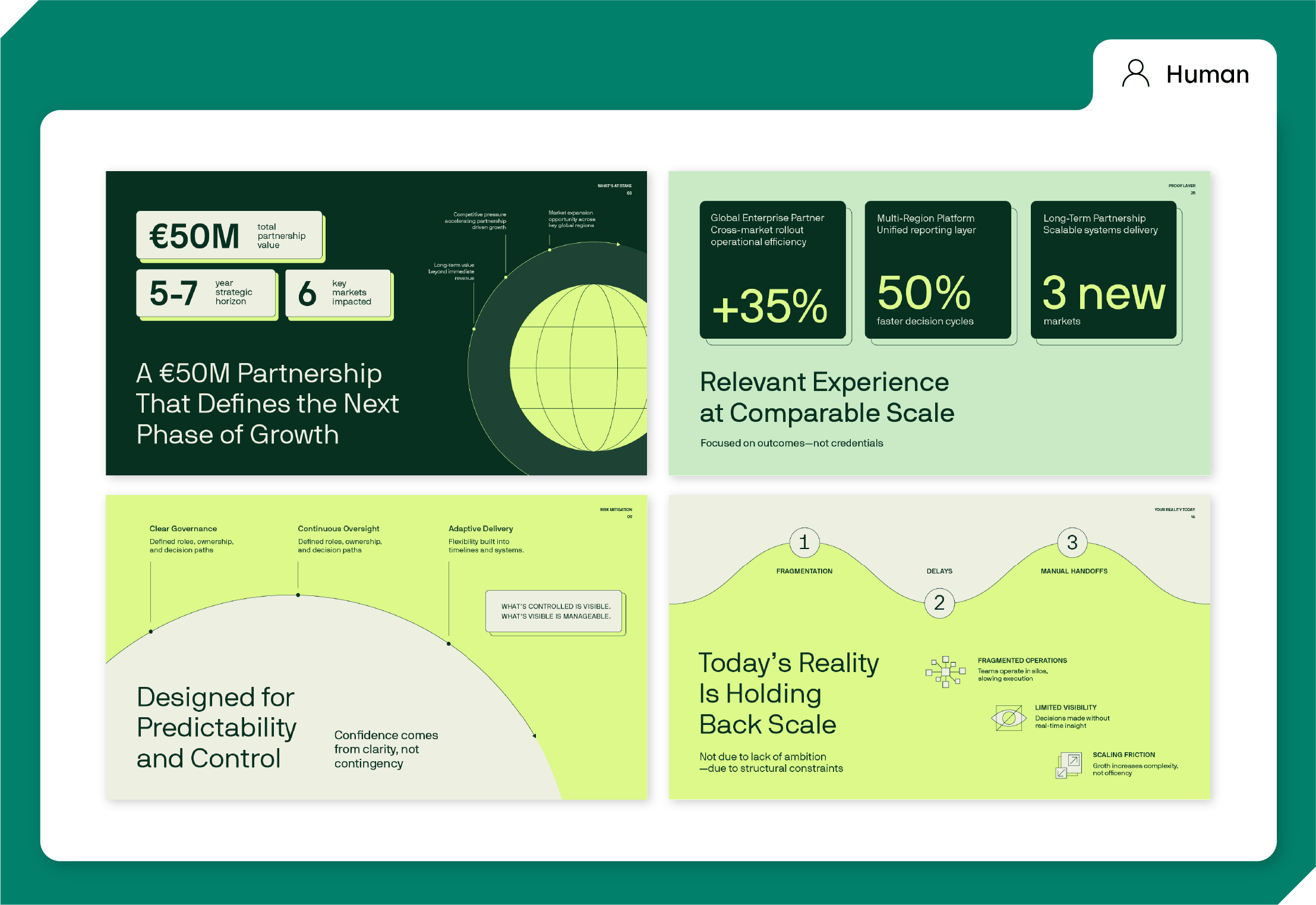
He took a different route:
1. “What’s at Stake?” (context before solution)
2. Your Reality Today (pain points visualised)
3. Our Role in Your Future State (story arc slide)
4. Proof Layer (not bragging, relevance)
5. Risk-mitigation but without fear language
It didn’t just show what we do, it showed why this partnership makes sense.
We expected AI to produce something generic. It didn’t.
It was professionally structured, and even used bid-friendly language.
Some specific surprises:
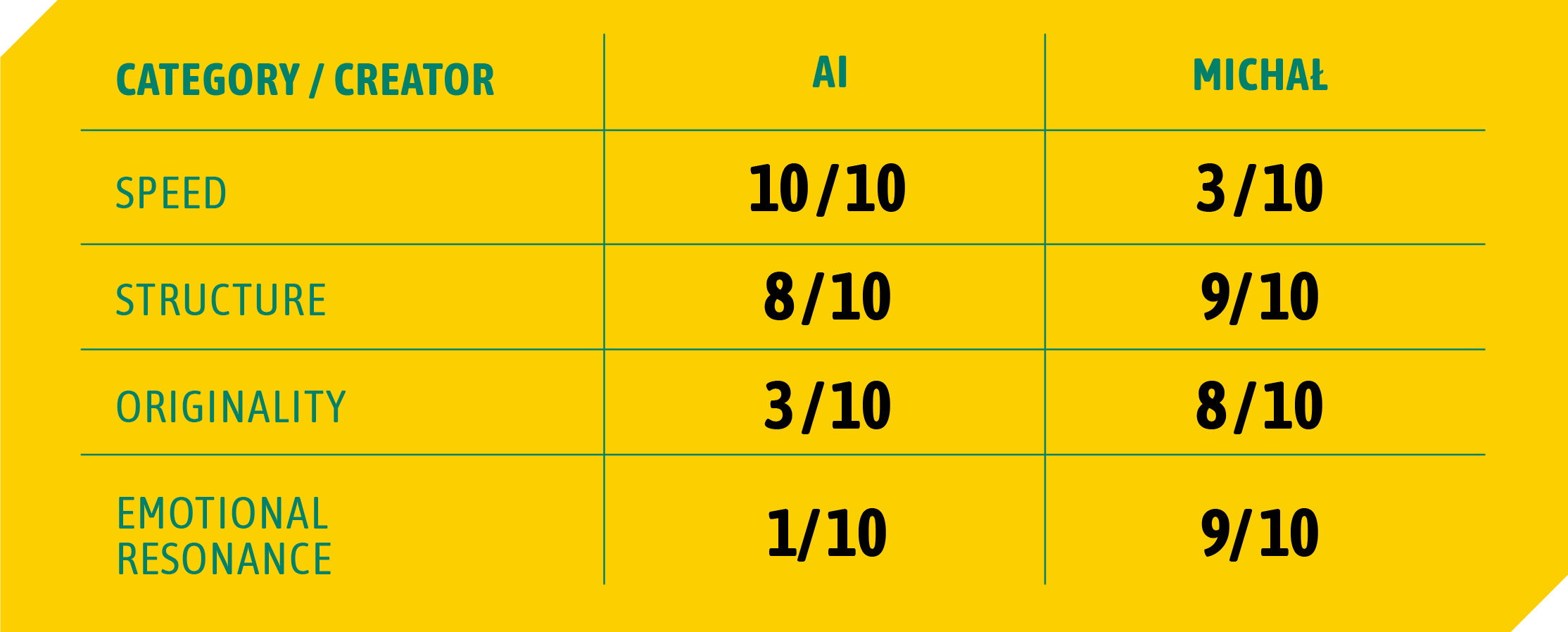
AI produced a valid proposal deck. You could send it. No one would laugh, question it, or reject it because of layout.
But bid proposals aren’t graded. They are chosen by humans in rooms filled with tension, politics, and fear of choosing the wrong partner. AI felt like: “Here is everything you asked for.” The human version felt like: “Here’s why you cannot afford to not choose us”
Both are useful. Only one moves the needle.
Internal blind vote results:
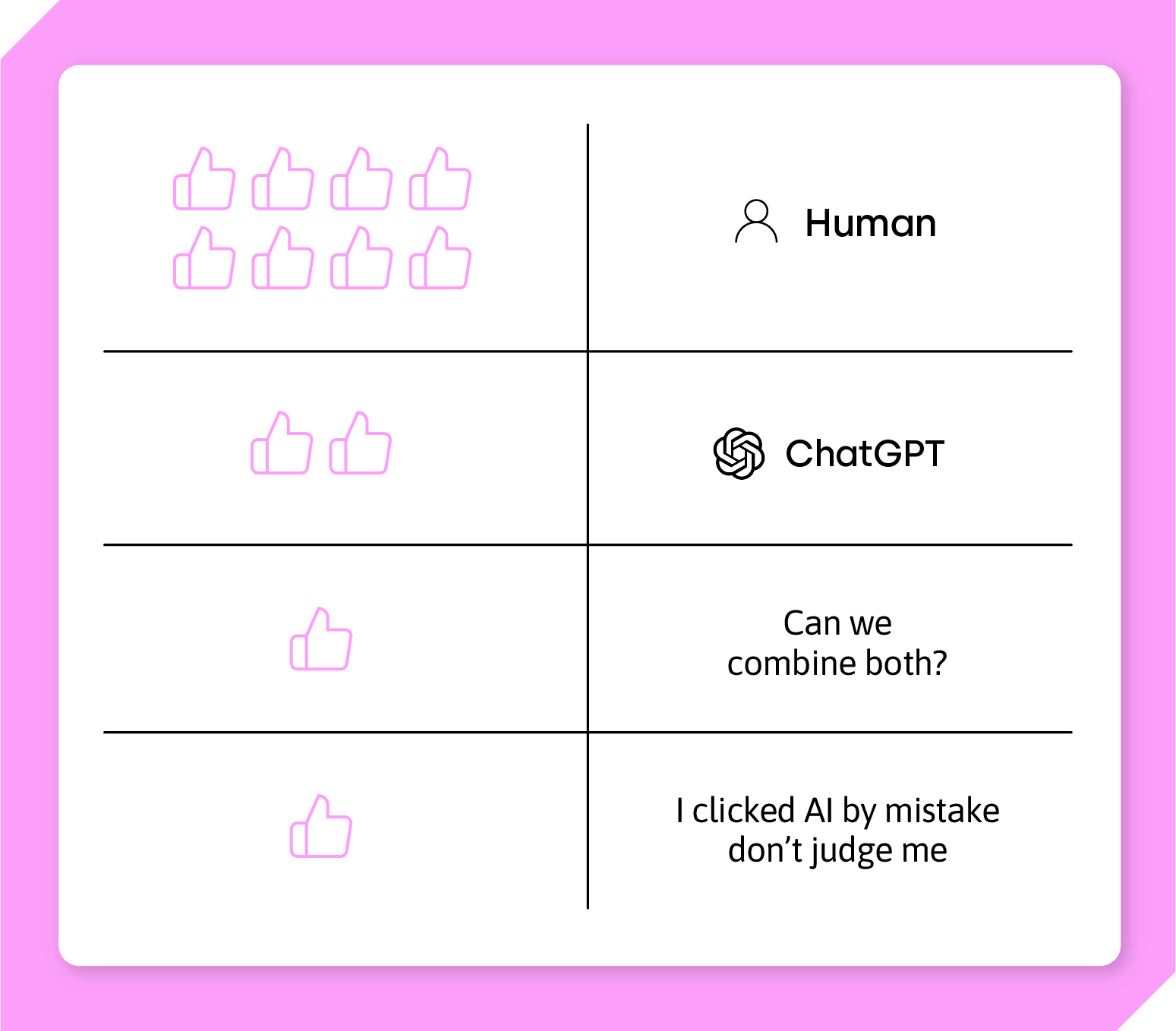
AI finished first.
Michał finished to win.

This is Episode 2 of our AI vs Human: Design Experiments series.
Next up: Storytelling & narrative slides.
Curious how Michał prepared for this battle? He brought a packed lunch labelled “Focus Mode Only.” We didn’t ask what’s inside.
• AI = fast, structured, professional
• Human = contextual, strategic, persuasive
• Bid proposals need clarity + feeling, not just formatting
• AI is great for building slides
• Humans are still needed to win trust